
Over a quarter of retail workers experience hair shedding due to stress

Retail work is stressful, but new research suggests it may also be showing up on people’s scalps.
Key findings from the research include:
- 90% of retail workers say they feel stressed in day-to-day life
- Nearly six in ten (59%) notice negative changes to their hair and scalp during periods of stress
- Over one in four (27%) report increased hair shedding or breakage linked to stress
- Dandruff (38%), increased flaking (32%) and persistent itchiness (30%) are the most common symptoms
The findings suggest retail workers feel the physical effects of stress more acutely than others, with symptoms often appearing within days and taking weeks to resolve.
Nearly six in ten (59%) agree that stress causes negative changes to their hair and scalp
Dandruff (38%) increased flaking (32%), persistent itchiness and increased hair shedding or breakage (27%) are the most common stress-related scalp issues
The research suggests stress is a near-universal experience for retail workers, with the pressure of day-to-day work not only affecting mental well-being but also showing up physically through hair and scalp health.
The survey commissioned by coal tar shampoo brand Polytar found that nine in ten (90%) people working in retail and wholesale trade feel stressed to some degree in their daily lives. More than one in four (27%) describe themselves as quite stressed, while a further 27% say they are moderately stressed, highlighting the sustained pressure faced by those working in customer-facing roles.
The impact of stress goes beyond mental health. Nearly six in ten retail workers (59%) report noticing negative changes in their hair and scalp when they are under stress, compared to 49% of Brits across all professions, suggesting that those working in retail feel the physical effects of stress more acutely than the general workforce. When asked about specific symptoms experienced during stressful periods over the last 12 months, dandruff emerged as the most commonly reported issue, affecting 38% of retail workers. Increased flaking was reported by 32%, while persistent itchiness affected 30%. Other symptoms included a dry or tight-feeling scalp (27%) and increased hair shedding or breakage (27%).
For many retail workers, stress-related scalp changes appear quickly. Over two in five (44%) said symptoms developed within a few days of feeling stressed, while a further 34% noticed changes within one to two weeks. However, while symptoms often emerge rapidly, they can take significantly longer to resolve. On average, retail workers reported it took just over three weeks (3.1 weeks) for symptoms to ease, with 7% saying their scalp issues had not improved at all.
In response to stress-related scalp problems, many retail workers attempt to self-manage symptoms. Over two in five (42%) said they switched shampoo or haircare products, while 35% reported using medicated shampoos. A similar proportion (41%) tried to reduce stress through rest, exercise or mindfulness. However, fewer sought professional support, with just 11% saying they had consulted a medical or haircare professional. One in four (25%) admitted to ignoring symptoms and hoping they would improve on their own, while 20% said they covered or styled their hair differently to hide visible signs.
When asked what they believe contributes to stress-related scalp problems, poor sleep or fatigue was the most frequently cited factor, mentioned by over half (55%) of retail workers. Increased anxiety or mental health pressures were identified by 50%, while work pressure or burnout was cited by 49% and financial stress linked to the cost of living cited by 45%.
Help with stress and scalp conditions
Trichologist (hair and scalp expert) Amy Hunt said, “From a trichological perspective, stress is a significant trigger for scalp conditions. Chronic stress keeps the nervous system in a heightened state, increasing cortisol levels, which can disrupt immune function and weaken the scalp’s protective barrier. This can accelerate skin cell turnover and inflammation, making conditions such as dandruff, psoriasis, and eczema more likely to flare, particularly in those already predisposed.”
The NHS recommends several ways to reduce stress, such as being active, connecting with people and even taking some ‘me time’. The recommendations are lifestyle changes that will eventually reduce the likelihood of stress-related scalp issues.
For those looking to tackle symptoms directly, medicated shampoos can offer targeted support. “Medicated shampoos contain active ingredients that help reduce inflammation, rebalance the scalp microbiome, and regulate excessive skin cell turnover,” said Amy. “Used consistently during flare-ups, they can ease symptoms such as itching, scaling, and irritation and form part of an effective long-term management plan.”
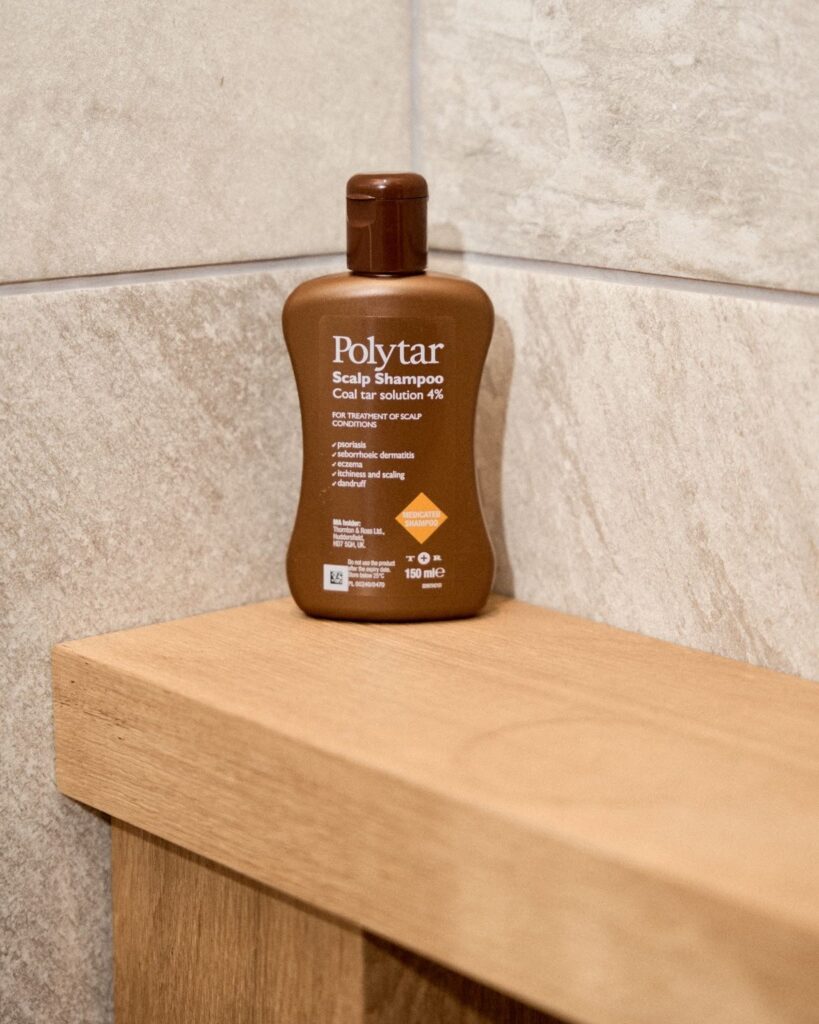
Polytar Medicated Scalp Shampoo is available from £11.99 from www.polytar.co.uk, as well as leading retailers including Boots, Amazon, and Superdrug.