

Fuel Fiasco: government wins confidence vote over fuel protests
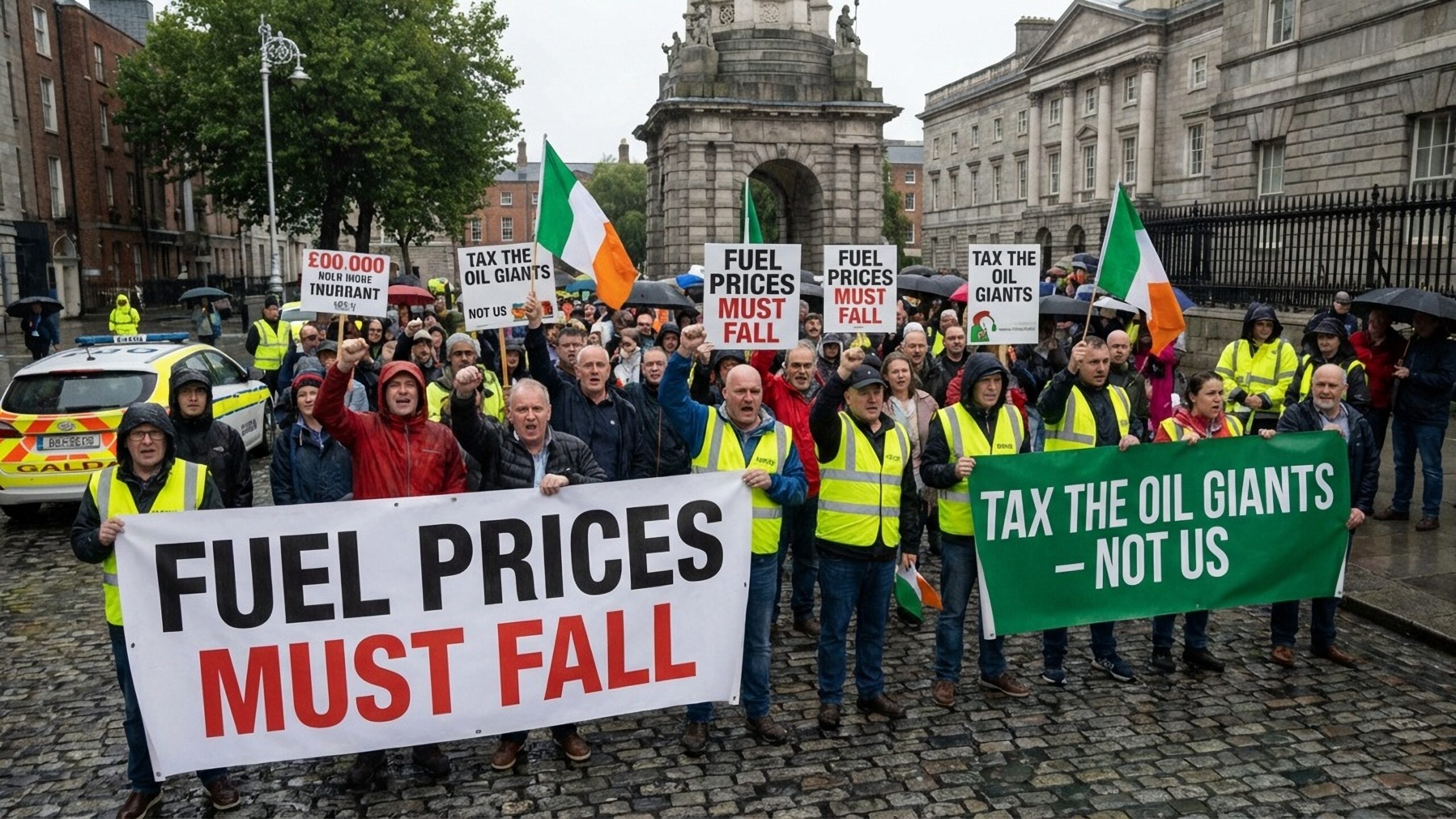
It’s a fluid story – but as of 16th April, fuel prices are starting to fall across Ireland as excise cuts come into effect.
The Dáil voted that it has confidence in the Irish government. A motion of no confidence had been tabled over its handling of the fuel protests last week, which saw blockades at fuel depots and motorways around the country and caused widespread traffic disruption. Sinn Féin, tabled a motion of no confidence on Tuesday, but the Irish government subsequently tabled a motion of confidence in itself, which has the power to override a motion from the opposition.
The Irish government announced a package worth €505m to support those “most impacted” by rising fuel costs.
Fuel costs have soared globally as a result of the US-Israel war with Iran and demonstrators in the Republic of Ireland have been blocking fuel distribution sites and many major motorways and roads in protest.
Taoiseach Micheál Martin said on Sunday that his government is extending temporary measures to reduce excise duty on petrol, diesel and marked gas oil.
Some stations are showing a 10c drop, but industry warns reductions may take days to fully filter through.
The impact of the reduction in excise duty that took effect mid-week has started to be felt on forecourts around the country with the price of diesel falling in some instances by 10 cent, mirroring the tax cut the Government announced over the weekend.
In other cases, the prices remained static, a reflection of what Fuels for Ireland had previously warned might be a staggered approach to the price cuts depending on when a forecourt last received a delivery.
At one point, over 100 fuel stations were out of supply, with some estimates suggesting that could potentially rise to over 500. The blockades at key fuel depots, including the Whitegate Refinery, Shannon Foynes Port, and the Port of Galway, severely restricted movement and caused major traffic disruptions.
FFI chief executive Kevin McPartlan said he understood motorists would want to see the excise reduction reflected at the pump as quickly as possible.
“It’s important to say that this may not happen at every forecourt immediately, and that should not be misunderstood as a failure to pass on the tax cut.”
The reason for some delays was “practical” as excise duty is applied “when fuel leaves a terminal or refinery, not when it is sold at the pump”.
The Government announced a number of measures to help ease prices on Irish consumers amid the Middle East conflict.
This includes extending the temporary measures to reduce excise duty on petrol, diesel and Marked Gas Oil from the end of May to the end of July; further reducing mineral oil tax rates by 10 cent per litre on petrol, 10 cent per litre on diesel and 2.4 cent per litre on Marked Gas Oil from April 15; postponing the increase in carbon tax from May until Budget in October; enhancing the Transport Support Schemes for some groups; and introducing a Fuel Subsidy Support Scheme for farming and fisheries.
By Wednesday 15th April the price of a barrel of Brent crude hovered at the $96 mark, as much as $20 less than it was at the height of the pricing crisis in the middle of March.
The Irish Times reported that markets remain volatile and, industry sources have warned if sentiment shifts and traders develop a more negative view of what is happening in the conflict in the Middle East, prices could climb sharply again and quickly wipe out the tax cuts that have been rolled out in Ireland.


