
Ireland takes centre stage of the EU – and Fuels for Ireland has a role

by Kevin McPartlan
Ireland’s moment in Europe
From 1 July to 31 December 2026, Ireland will hold the Presidency of the Council of the European Union, placing the country at the centre of European decision-making for six months.
This will be Ireland’s eighth Presidency since joining the European Community in 1973, and it comes at a particularly important moment for Europe. The Presidency gives Ireland a significant role in chairing negotiations, shaping discussions and helping broker agreement between Member States on EU legislation and policy.
While Ireland’s formal Presidency programme will be shaped by Government and EU priorities, it is already clear that energy, competitiveness, decarbonisation and security will be central themes. Across Europe, policymakers are grappling with how to maintain economic resilience while accelerating the transition to lower-carbon energy systems.
For Ireland, this is an opportunity to contribute constructively to European debates around energy transition, competitiveness and resilience. It is also a moment to ensure that the practical realities of Ireland’s energy system are understood within wider EU policy discussions.
FuelsEurope Dublin engagement
Fuels for Ireland has already begun engaging at European level ahead of the Presidency.
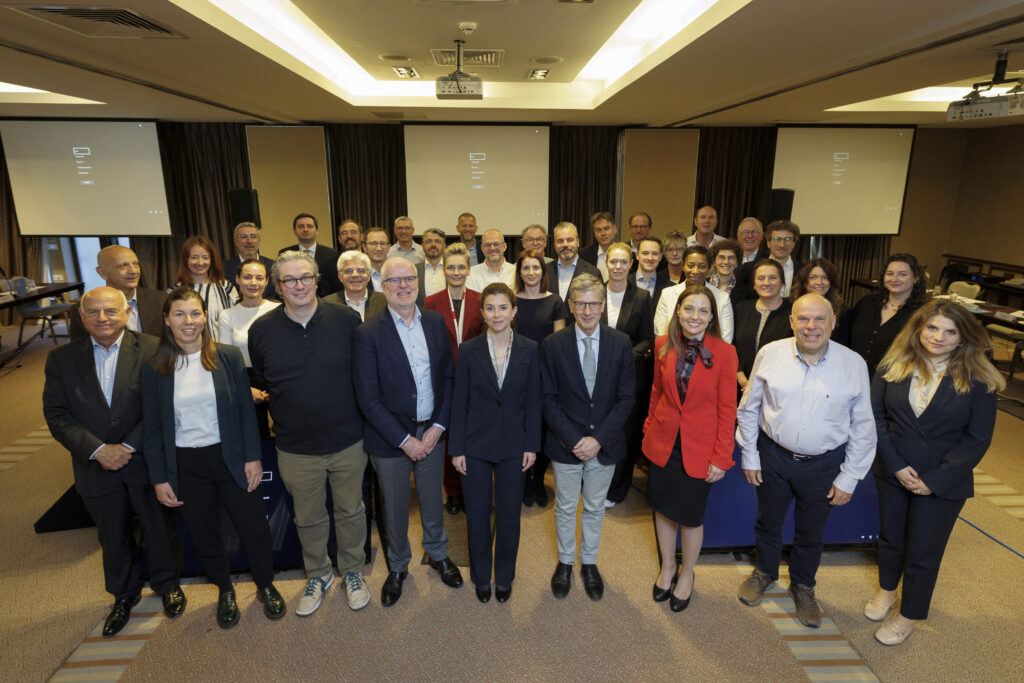
In May, Fuels for Ireland hosted senior representatives from FuelsEurope and national fuel associations in Dublin, bringing together European industry representatives and Irish policymakers for a timely discussion on the future of energy and transport.
The event was addressed by Minister for Climate, Energy and Environment Darragh O’Brien, while Secretary General Oonagh Buckley also attended and spoke. Discussions focused on energy transition, decarbonisation, competitiveness, energy security, renewable fuels and Ireland’s priorities during its Presidency of the Council of the European Union.
For Fuels for Ireland, the message is clear: Ireland’s Presidency should involve serious engagement with all parts of the energy system. The liquid fuels sector recognises the scale of the transition challenge and wants to contribute constructively to the conversation.
Renewable liquid fuels have an important role to play during the transition period, particularly in sectors and use cases where electrification may be slower, more difficult or more costly to deliver at scale. That does not mean slowing the pace of decarbonisation. It means ensuring that policy reflects the full range of solutions required to reduce emissions while maintaining energy security and affordability.
Ireland’s energy and climate priorities
As Europe advances its climate and energy objectives, the sustainability and credibility of renewable fuels are becoming increasingly important policy issues.
The European Commission’s Renewable Energy Directive framework places strong emphasis on sustainability criteria and certification. The Commission recognises voluntary certification schemes which help verify that biofuels, bioliquids, biomass fuels, renewable hydrogen and related fuels comply with EU sustainability rules. These schemes are designed to verify sustainability criteria, greenhouse gas savings and feedstock traceability. They also involve external auditing and chain-of-custody systems.
This matters because renewable fuels policy must command public confidence. As the use of renewable fuels increases, so too does the need for clear assurance that fuels placed on the market meet robust sustainability standards.
Across Europe, there is increasing political and public scrutiny around feedstocks, sustainability claims and emissions savings. That scrutiny should not be viewed as a barrier to progress. In fact, greater scrutiny makes strong certification systems even more important.
If renewable fuels are to play a credible role in decarbonisation, then policymakers, industry and consumers must have confidence in how those fuels are sourced, certified and verified. Traceability and sustainability assurance are no longer technical side issues. They are now central to the policy debate.
Why an EU fuels event should be part of Ireland’s Presidency
This is why Fuels for Ireland believes a dedicated discussion on sustainability certification, traceability and renewable fuels during Ireland’s EU Presidency would be timely and important.
As Europe increases its use of renewable fuels, confidence in sustainability systems becomes critically important. Decarbonisation measures must deliver genuine environmental benefit, and the systems used to verify those benefits must be clear, robust and trusted.
Ireland has experienced particularly intense public debate around biofuels and feedstocks. Fuels for Ireland believes constructive engagement is preferable to polarisation. These are complex issues, and they deserve serious, evidence-based discussion rather than simplified arguments.
An event held during Ireland’s EU Presidency event would provide an opportunity to bring together policymakers, regulators, certification experts, industry representatives, academics and sustainability specialists. It would also create a forum for practical discussion on how certification systems work, how traceability can be strengthened, how transparency can be improved, and what lessons can be learned from across Europe.
Potential themes could include the role of certification in renewable fuel markets, the importance of chain-of-custody systems, the need for consumer confidence, and the balance between ambition and credibility in climate policy.
The aim should not be to avoid difficult questions. It should be to create a credible space where those questions can be addressed properly.
Ireland has an opportunity to become a place where complex but necessary conversations about renewable fuels can happen in a serious and constructive way. That would be a valuable contribution to the wider European debate.
Why Government may support this
The proposed event aligns closely with the direction of European energy policy.
Sustainability, certification and traceability are already embedded in the EU’s renewable energy framework. They are also highly relevant to the wider climate, competitiveness and resilience themes expected to feature during Ireland’s Presidency.
Ireland’s Presidency will take place during a period when Europe is seeking to maintain climate ambition while also strengthening industrial competitiveness, energy security and supply-chain resilience. The Irish Government has already described the Presidency as a central leadership role at the heart of EU decision-making, with Ireland guiding negotiations and helping deliver EU laws and policies affecting more than 450 million people.
An event focused on renewable fuel certification would fit naturally within that context. It would not be a narrow industry discussion. It would be a policy-relevant conversation about how Europe ensures that climate measures are both ambitious and credible.
It would also provide an opportunity for Ireland to demonstrate leadership in an area where public trust matters. Climate policy cannot succeed on ambition alone. It must also be practical, transparent and capable of maintaining confidence among consumers, businesses and policymakers.
Key considerations
Fuels for Ireland believes there are several key considerations that should guide this discussion.
First, renewable liquid fuels have a role to play in decarbonisation. The transition will require electrification, efficiency, behavioural change and alternative fuels. It should not be reduced to a single technology pathway.
Second, sustainability and credibility matter. Renewable fuels must deliver genuine emissions savings and must be supported by robust systems that can withstand public and political scrutiny.
Third, strong certification systems are essential. The European framework already recognises the importance of certification, traceability and external auditing. These systems will become even more important as renewable fuel use grows.
Fourth, Ireland can contribute constructively to European policy discussions. During its Presidency, Ireland has an opportunity to act as a serious convenor of discussions on energy transition, transport decarbonisation and supply resilience.
Fifth, the transition requires pragmatism as well as ambition. Energy security, affordability and decarbonisation must be considered together. Policy that fails to account for any one of these risks losing public support.
Finally, open engagement is preferable to ideological debate. Ireland’s fuel industry is engaging seriously with transition challenges and wants high standards, robust oversight and renewable fuels policy that commands public confidence.
Looking ahead
Ireland’s Presidency of the Council of the European Union is an important national moment. It places Ireland in a position to help shape discussions that will influence Europe’s future direction on climate, energy, competitiveness and resilience.
For Fuels for Ireland, the opportunity is to contribute positively and practically. The liquid fuels sector is part of the energy system today and wants to be part of the transition conversation in a constructive way.
The months ahead should be used to bring together policymakers, industry, experts and civil society to discuss what credible, practical and sustainable decarbonisation looks like.
Ireland can act as a serious European convenor. It can host important conversations about the future of energy and transport. And it can help ensure that the transition is not only ambitious, but also credible, resilient and grounded in evidence.
That is the role Fuels for Ireland wants to play.